

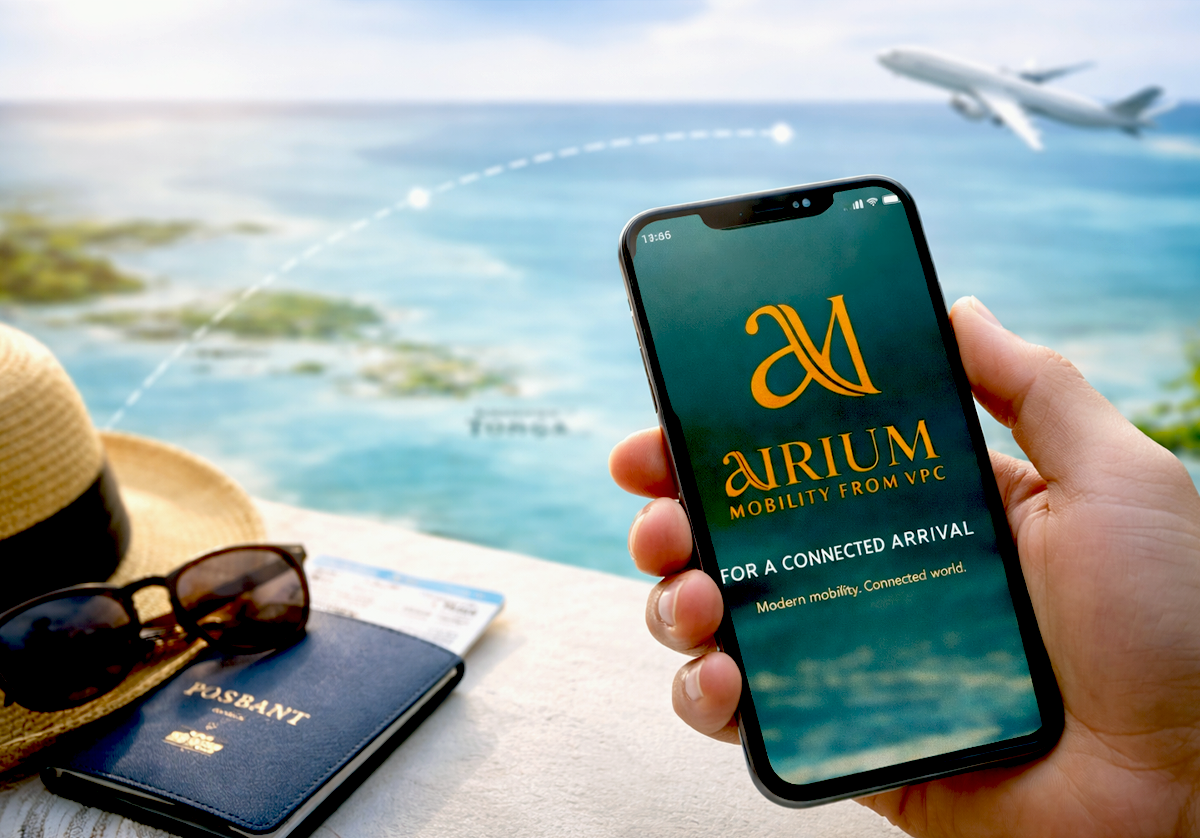
What an eSIM Is — and Why It Changes How We Move
For a long time, staying connected while travelling meant planning around borders.
You landed, queued at an airport kiosk, bought a local SIM, swapped cards, lost your home number, and repeated the process again at the next destination. For many travellers, this became normal — inconvenient, but accepted.
An eSIM changes that logic.
From physical cards to embedded connectivity
An eSIM — short for embedded SIM — is a digital SIM built directly into your phone. Instead of inserting or removing a plastic card, connectivity is activated by downloading a secure profile onto your device.
The phone remains the same.
The number of borders you cross becomes irrelevant.
Once installed, an eSIM allows your device to connect to local mobile networks automatically, without manual switching, without queues, and without changing hardware.
In simple terms:
the SIM no longer travels — you do.
Why this matters now
The way people move has changed.
Travel is no longer linear. Many people move between islands, countries, and regions within short periods of time. Business trips overlap with holidays. Work continues while travelling. Family, logistics, payments, and navigation all depend on stable connectivity.
Connectivity is no longer a convenience.
It is infrastructure.
An eSIM reflects that shift. It removes friction from movement and lets technology fade into the background — where it belongs.
How eSIMs work in practice
Once an eSIM is activated:
Your phone connects to supported mobile networks in each country
The strongest available network is selected automatically
You retain your primary SIM for calls and messages if you wish
No physical SIM swaps are required
For the user, the experience is simple:
scan a QR code or install via app
activate
connect
Everything else happens quietly.
Why Airium chose eSIM technology
Airium was created to support movement — not just between places, but between systems.
Our work began in consulting, where clarity and structure matter. It continued in mobility, where reliability and responsibility are essential. An eSIM fits naturally between these two worlds.
Airium eSIMs are designed to:
reduce friction
remove unnecessary steps
support continuity across borders
work quietly, without interruption
We chose eSIM technology not because it is new, but because it is appropriate for how people now live and travel.
Built for the Pacific reality
Life in the Pacific is defined by distance and connection at the same time.
Island travel is common. Cross-border movement is routine. Connectivity must work across regions with different infrastructures, operators, and standards.
Airium eSIMs are structured to reflect this reality. Coverage is regional by design, allowing people to move naturally across the Pacific without repeatedly resetting their connection.
This is not about global coverage for its own sake.
It is about relevant coverage, designed around how people actually move.
Security, reliability, and responsibility
eSIM technology is not experimental. It is already used by major device manufacturers, airlines, logistics providers, and institutional operators.
Profiles are encrypted. Activation is controlled. Networks are selected based on availability and performance.
For Airium, reliability is not optional.
Connectivity failures are not inconveniences — they are disruptions.
That is why due diligence matters:
understanding which networks are used
confirming operator partnerships
ensuring redundancy where possible
Quiet infrastructure requires careful choices behind the scenes.
A different approach to choice
Many connectivity products overwhelm users with options:
dozens of countries
multiple gigabyte tiers
complex pricing tables
Airium takes a different approach.
Plans are structured around time and intensity of use, not technical complexity. The goal is to let users choose what fits their journey — without needing to understand telecom terminology.
Connectivity should adapt to people, not the other way around.
Looking ahead
An eSIM is not the end point. It is a foundation.
As mobility, payments, and digital identity continue to converge, embedded connectivity becomes part of a larger system — one that supports movement with fewer interruptions and more trust.
Airium exists in that corridor.
Quietly enabling connection, while allowing people to focus on where they are going — not how they stay online.
In Tonga we say
“ʻOku ʻikai ke ngalo ʻa e fonua naʻe fakakakato ai ʻa e tangata.”
One does not forget the land that shaped and completed them.
Technology should respect place, not erase it.
Airium is built with that principle in mind.